cisco 各系列路由器介绍

思科 2600 系列路由器Cisco Systems通过Cisco 2600系列将企业级的通用性、集成和功能扩展到了创建以机构。随着新服务和应用的面市,Cisco 2600系列的模块化体系结构能够提供适应网络技术变化所需的通用性。Cisco 2600系列配置了强大的RISC处理器,能够支持当今不断发展的网络中所需的高级服务质量(QoS)、安全和网络集成特性。通过将多个独立设备的功能集 成到一个单元之中,Cisco 2600系列降低了管理远程网络的复杂性。Cisco 2600系列与Cisco 1600、1700和3600系列共享模块化接口,为Internet、内部网访问、多服务语音/数据集成、模拟和数字拨号访问服务、VPN访问、ATM 访问集中、VLAN以及路由带宽管理等应用提供经济有效的解决方案。

关键特性
  • 通用性/ 投资保护-可以现场更新的模块化接口能够启动数以千计的定制化解决方案,并能够轻而易举地适应未来网络的要求。
  • 集成/可 管理性-降低拥有成本,简化远程管理,提供结合CSU/DSU、复用器、调制解调器、语音/数据网关、ISDN NT1、防火墙、VPN、加密和压缩设备的集成化网络。
  • 多服务语 音/数据网络-降低办公室之间的电话/传真费用;通过利用Cisco IOS软件服务质量(QoS)特性(例如RSVP、WFQ、承诺访问速率[CAR]和随机早期检测[RED]),语音流量可以实现数字化并封装在IP数据 包中,而且能够与数据流量合并。
思科 2800 系列路由器

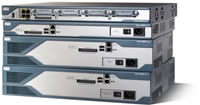
思科 2800                                                系列路由器Cisco 2800系列包括四个平台:Cisco 2801、Cisco 2811、Cisco 2821和 Cisco 2851。与价格类似的前几代思科路由器相比,Cisco 2800系列可以将性能提升五倍,将安全和话音性能提升十倍,并且可以提供新的嵌入式服务选项,因而可以为客户提供重要的附加值。它可以在大幅度提升插槽 性能和密度的同时,支持Cisco 1700和2600系列中现有的90多种模块。

思科 3200 系列路由器

思科 3200 系列移动接入路由器这个紧凑的、高性能的接入解决方案能够以适 用于各种交通工具的外型,为国防、公共安全、国土安全和运输市场提供无缝的移动功能和多个无线网络的互操作能力。

Cisco 3200移动接入路由器可以在多个处于运动之中的无线电、蜂窝式电话、微型和无线局域网(WLAN)网络之间提供无缝的通信,从而将IP网络拓展到了运动 中网络领域。

Cisco 3200移动接入路由器主要适用于运动中的交通工具,并可以在多个网络之间实现无线连接,从而让用户可以在业界标准的IP技术的基础上部署关键任务型应 用。IP网络为在使用各种传输介质的用户之间共享信息和应用提供了一个平台。Cisco IOS软件添加了功能丰富的服务、管理功能和移动网络功能。Cisco 3200移动接入路由器让用户可以有效地在一个对等的、层次化的或者网格式的IP网络中传输关键任务型语音、视频和数据。用户可以迅速地制定更加准确的决 策,从而提高他们在现场的工作效率。

Cisco 3200移动接入路由器可以为用户提供下列优势:

  • 利用独立于位置或者运动状态的无缝移动功能,实现安全的数 据、语音和视频通信。
  • 以一个适用于各种交通工具的、紧凑的、坚固的外型,提供很高 的性能。
  • 利用Cisco IOS软件提供先进的IP服务和互操作性。

Cisco 3200移动接入路由器(如图1所示)的设计目的是集成到系统集成商所部署的、全面、定制的通信解决方案中。这使得用户可以在各种空中、陆地或者海洋交通 工具(包括用于军事或者公共安全用途的交通工具)中部署通信网络。系统集成商可以提供一个完整的移动解决方案,其中包括Cisco 3200移动接入路由器硬件、Cisco IOS软件、专门定制的布线设计、电源和外壳,以及其他必要的组件。这些组件可能包括Cisco Aironet WLAN产品、思科安全硬件和软件、思科路由和交换产品,以及Cisco LAN和WAN管理软件。

思科 3600 系列路由器

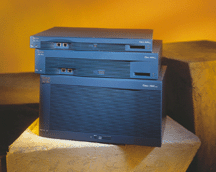
思科 3600 系列路由器Cisco 3600系列是一个适合大中型企业Internet服务供应商的模块化、多功能访问平台家族。Cisco 3600系列拥有70多个模块化接口选项,提供语音/数据集成、虚拟专网(VPN)、拨号访问和多协议数据路由解决方案。通过利用CIsco的语音/传真 网络模块,Cisco 3600系列允许客户在单个网络上合并语音、传真和数据流量。高性能的模块化体系结构保护了客户的网络技术投资,并将多个设备的功能集成到一个可管理的解 决方案之中。3600捆绑还可用于抓住特定的RAS机遇。

关键特性
  • 在一个平台中结合了拨号访问、先进的局域网到局域网]] >

失忆!

夜深里,人静了,自己的心平静了。
每当这时候,自己都好低落。
现在自己变的好深沉,好忧虑。
深沉点好,可以变的成熟些。
努力让自己忘记她,但发现自己好失败。
常常想想她过的怎么样。
现在她在做什么,工作还是休息还是陪男朋友。
看看手机有没有信息,多么希望她的出现,那怕是点施舍。
多想发个短息问问,最近过的好吗?
但是我不没有。
QQ习惯了隐身,当她上线的时候多想问一句,在吗?
但是我没有。
因为
这都是多余的,这已不属于我。
现在会有个更好的男人陪着她,照顾她,爱着她。
而自己空挡的心,有谁来填满。
难道注定我一生孤独,一生后悔。

—2010年03月23日夜深

下雪了、

这年头,天气真犀利。现在这个季节还下雪,真是可怜啊,感到2012真会来。
昨天看今天的气温是1-7,这么冷,想着明天的风应该很大。早上醒来,真冷啊。只好穿羽绒服去上课了。出来宿舍楼,没想到,竟然飘起了雪花。十点多的时候大晴天了。什么鬼天气啊,变化这么快。弄的许多人都感冒了。

。。。。。。。

不知道自己怎么了
从来不喜欢写日志
现在没事就来这里
看看、听听、写写
这里什么也没有
只有安静、只有key1088
一个寂静的世界
一个寂寞的世界
一个真正属于哥的世界

这里本来没有哥,来的人多了,却有了哥的传说
你已不属于哥,哥却在传说中遇见了“姐”

构建网络负载平衡(NLB)

[转]构建网络负载平衡(NLB) 作者:佚名    厚朴教育来源:佚 名      NLB群集允许用户把两台或更多的服务器结合起来使用,在客户端看起来就像是一台服务器。进入NLB群集的连接 请求可以分解传送给两个或更多的NLB群集成员,这样用户可以添加越来越多的服务器(最多32台),形成一个功能非常强大的FTP站点或Web站点

  当把一台服务器(包括Web服务器、FTP服务器或者流媒体服务器等等)放入网络中之后,随着客户端数量的不断增 加,人们往往需要功能更强大、处理速度更快的服务器。为了解决这个问题,如果将原有的服务器替换成功能更强大、处理速度更快的服务器显然并不是值得称道的 办法。但是如果能把新服务器添加到原有服务器的处理能力基础上而不是替换它,这种方案毫无疑问更容易被用户接受。网络负载平衡(Network Load Balancing,NLB)群集的出现正好实现了这一目的。

  NLB群集最早出现在Windows 2000 Server的Advanced Server系统中,在Windows Server 2003的各个版本中均提供了此项功能。NLB群集允许用户把两台或更多的服务器结合起来使用,在客户端看起来就像是一台服务器。进入NLB群集的连接请 求可以分解传送给两个或更多的NLB群集成员,这样用户可以添加越来越多的服务器(最多32台),形成一个功能非常强大的FTP站点或Web站点。

  在NLB群集中,每台服务器都会有一个属于自己的静态IP地址,但NLB群集中的所有服务器还有一个共同的IP地址—NLB群集地址。客户端可 以通过这个IP地址连接到NLB群集,就像连接到其它IP地址一样。当有客户端请求连接到这个共享的IP地址时,NLB群集会将每个访问请求指派一个具体 的群集成员。

  尽管NLB群集是一种非常简洁的工具,但安装配置NLB群集必须满足很严格的要求,譬如首先要保证群集中服务器必须能够正常的单独运行。以安装 配置两节点的NLB群集为例,这些条件简述如下:

  (1)每个节点服务器必须拥有一个静态IP地址,另外还应该为NLB群集准备一个静态IP地址。

  (2)NLB群集需要拥有一个DNS名称,且该DNS记录项应该与区群集IP地址建立了映射关系。

  (3)每个节点服务器上应该安装完全相同的服务器软件(如IIS、终端服务器等网络服务),以构成一个两节点的NLB群集。

  在接下来的内容中将介绍如何安装配置一个较为简单的NLB群集—拥有两个节点的Web服务器群集。所要安装配置的服务器群集环境为:两台运行 Windows Server 2003 Enterprise Edition的服务器,可以将其称为节点1和节点2。由于所有的NLB群集成员必须使用属于相同子网的静态IP地址,因此准备为节点1分配的静态IP地 址为“10.115.223.1”,准备为节点2分配的静态IP地址为“10.1115.223.2”,为NLB群集分配的IP地址是 10.115.223.10。对NLB和配置环境了解之后,现在就可以进行详细的操作了。

  NLB群集中的每一个节点拥有一个静态IP地址是安装配置NLB群集的首要且必要条件。我们首先为节点1进行配置。

  在节点1服务器的桌面上右击“网上邻居”,打开“网络连接”窗口。然后右键单击“本地连接”图标,执行“属性”快捷命令,打开“本地连接 属性”对话框。

  在“本地连接 属性”对话框中双击“Internet 协议(TCP/IP)”选项,打开“Internet 协议(TCP/IP) 属性”对话框。在常规选项卡中点选“使用下面的IP地址”单选框,并指定静态IP地址。本例使用IP地址为“10.115.223.1”,子网掩码为 “255.255.254.0”,默认网关为“10.115.223.254”,DNS服务器地址为“10.115.223.1”(如图1)。


构建网络负载平衡群集(NLB) - 落花往事 - 落花往事

  图1

  在Windows Server 2003中安装部署Web服务需要IIS 6.0的支持,但是在默认情况下IIS 6.0组件并没有被安装,因此手动安装IIS 6.0组件。

  在“控制面板”中双击“添加或删除程序”图标,在打开的“添加或删除程序”对话框中单击“添加/删除Windows组件”按钮,打开 “Windows组件向导”对话框。

  在“组件”列表中找到并双击“应用程序服务器”复选框,在打开的“应用程序服务器”对话框中双击“Internet信息服务(IIS)”选项, 打开“Internet信息服务(IIS)”对话框。在子组件列表中找到并勾选“万维网服务”复选框,依次单击“确定/确定/下一步”按钮开始安装。最后 单击“完成”按钮结束安装过程(如图2)。


构建网络负载平衡群集(NLB) - 落花往事 - 落花往事

  图2

  用同样的方法为节点2安装Web服务器组件。


三、创建群集主机记录

  在安装NLB群集之前建议先把DNS准备好,在本例中节点1同时也是网络中的DNS服务器。可以在节点1上为群集指派一个DNS名称,依次单击 “开始/所有程序/管理工具/DNS”,打开“dnsmagt”窗口。

  在左窗格中依次展开“ServerName/正向查找区域”目录。然后右击域名“cpcw.com”区域,执行“新建主机”快捷命令(如图 3)。


构建网络负载平衡群集(NLB) - 落花往事 - 落花往事

  图3

  在打开“新建主机”对话框 “名称”编辑框中键入一个自定义的群集名称(本例键入“Cluster”);在“IP地址”编辑框中键入准备该群集指派的静态IP地址(本例为 “10.115.223.10”)。单击“添加主机”按钮,很快就会提示已经成功创建了主机记录(如图4)。


构建网络负载平衡群集(NLB) - 落花往事 - 落花往事

  图4

四、在节点1上安装配置NLB

  完成各项准备准备工作以后,就可以安装配置NLB群集了。对于两个节点而言,先在哪一个节点上安装配置NLB群集都是可以的。下面我们将在节点 1上进行安装配置。

  在节点1的桌面上右击“网上邻居”图标,打开“网络连接”窗口。然后右键单击“本地连接”图标,执行“属性”快捷命令,打开“本地连接 属性”对话框。

  观察“此连接使用下列项目”列表可以发现,默认情况下并没有选中“网络负载平衡”复选框。勾选该复选框(如图5),然后单击“属性”按钮,打开 “网络负载平衡 属性”对话框。在“群集IP地址”区域,设置NLB群集IP地址为“10.115.223.10”,该地址供群

谷歌关闭Google.cn 通过香港网站google.com.hk提供服务

谷歌关闭Google.cn 通过香港网站提供服务北京时间3月23日凌晨2点31分,google.cn自动跳转至google.com.hk,同时界面显示:“欢 迎来到谷歌搜索在中国的新家”。北京时 间3月23日凌晨3点07分,雅虎新闻频道援引美联社的报道称,谷歌将转移中国大陆的搜索引擎服务,但会继续保持在中国大陆的其它业务服务。

google.cn自动跳转至google.com.hk


北京时间3月23日凌晨2点31分,google.cn自动跳转至google.com.hk,同时界面显示:“欢迎来到谷歌搜索在中国的新家”。

另据网友反映,若此前用户设置的是谷歌的个性化界面,则在输入google.cn时,域名不会有跳转现象。

UPDATE:谷歌声明:仍保留技术、销售办事处

北京时间3月23日凌晨3点07分,雅虎新闻频道援引美联社的报道称,谷歌将转移中国大陆 的搜索引擎服务,但仍会保留谷歌音乐、谷歌热榜、iGoogle等服务,以及在中国大陆的技术和销售办事处,以便为中国大陆的网民做技术支持服务以及继续 为中文版的搜索引擎做销售支持。但销售团队需要按照google.com.hk的有关事项行事。

谷歌表示,该决定来自于谷歌美国总部,没有任何的谷歌中国员工参与该决定

OSPF、EIGRP、RIP、静态路由的重分布实验

快毕业了,该复习了。今天没事无聊,开了这个博客,写点东西吧。

网路拓扑图如下:
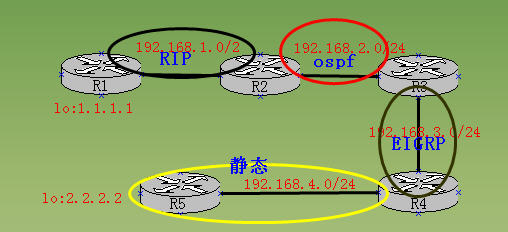


因为是用工大瑞普模拟器做的CCNA路由版,就这么多路由器。主要是熟悉命令。

路由器配置如下(为了空间问题,显示主要的):
R1:

interface Loopback0
ip address 1.1.1.1 255.255.255.0
!
interface Ethernet1/0
ip address 192.168.1.1 255.255.255.0
!
interface Ethernet1/1
no ip address
shutdown
!
interface Ethernet1/2
no ip address
shutdown
!
interface Ethernet1/3
no ip address
shutdown
!
router rip
network 1.0.0.0
network 192.168.1.0
!

R2:

interface FastEthernet0/0
ip address 192.168.1.2 255.255.255.0
duplex auto
speed auto
!
interface FastEthernet0/1
ip address 192.168.2.1 255.255.255.0
duplex auto
speed auto
!
router ospf 1
log-adjacency-changes
redistribute rip subnets
network 192.168.2.0 0.0.0.255 area 0
!
router rip
redistribute ospf 1
network 192.168.1.0
default-metric 2
!

R3:

interface Ethernet1/0
ip address 192.168.2.2 255.255.255.0
!
interface Ethernet1/1
ip address 192.168.3.1 255.255.255.0
!
interface Ethernet1/2
no ip address
shutdown
!
interface Ethernet1/3
no ip address
shutdown
!
router eigrp 1
redistribute ospf 1
network 192.168.3.0
default-metric 1000 10 1 255 1500
no eigrp log-neighbor-changes
!
router ospf 1
log-adjacency-changes
redistribute eigrp 1 subnets
network 192.168.2.0 0.0.0.255 area 0
!

R4:

interface Ethernet1/0
ip address 192.168.3.2 255.255.255.0
!
interface Ethernet1/1
ip address 192.168.4.1 255.255.255.0
!
interface Ethernet1/2
no ip address
shutdown
!
interface Ethernet1/3
no ip address
shutdown
!
router eigrp 1
redistribute static
network 192.168.3.0
network 192.168.4.0
default-metric 1000 10 1 255 1500
no eigrp log-neighbor-changes
!
ip classless
ip route 2.2.2.0 255.255.255.0 192.168.4.2
no ip http server
!

R5:

interface Loopback0
ip address 2.2.2.2 255.255.255.0
!
interface FastEthernet0/0
ip address 192.168.4.2 255.255.255.0
duplex auto
speed auto
!
interface FastEthernet0/1
no ip address
shutdown
duplex auto
speed auto
!
ip classless
ip route 1.1.1.0 255.255.255.0 192.168.4.1
ip route 192.168.1.0 255.255.255.0 192.168.4.1
ip route 192.168.2.0 255.255.255.0 192.168.4.1
ip route 192.168.3.0 255.255.255.0 192.168.4.1
no ip http server
!

路由表情况。

R1:
R1#SH IP ROute
Codes: C - connected, S - static, I - IGRP, R - RIP, M - mobile, B - BGP
D - EIGRP, EX - EIGRP external, O - OSPF, IA - OSPF inter area
N1 - OSPF NSSA external type 1, N2 - OSPF NSSA external type 2
E1 - OSPF external type 1, E2 - OSPF external type 2, E - EGP
i - IS-IS, L1 - IS-IS level-1, L2 - IS-IS level-2, ia - IS-IS inter area
* - candidate default, U - per-user static route, o - ODR
P - periodic downloaded static route

Gateway of last resort is not set

1.0.0.0/24 is subnetted, 1 subnets
C       1.1.1.0 is directly connected, Loopback0
R    2.0.0.0/8 [120/2] via 192.168.1.2, 00:00:15, Ethernet1/0
R    192.168.4.0/24 [120/2] via 192.168.1.2, 00:00:15, Ethernet1/0
C    192.168.1.0/24 is directly connected, Ethernet1/0
R    192.168.2.0/24 [120/2] via 192.168.1.2, 00:00:15, Ethernet1/0
R    192.168.3.0/24 [120/2] via 192.168.1.2, 00:00:15, Ethernet1/0

R2:

R2#sh ip route
Codes: C - connected, S - static, I - IGRP, R - RIP, M - mobile, B - BGP
D - EIGRP, EX - EIGRP external, O - OSPF, IA - OSPF inter area
N1 - OSPF NSSA external type 1, N2 - OSPF NSSA external type 2
E1 - OSPF external type 1, E2 - OSPF external type 2, E - EGP
i - IS-IS, L1 - IS-IS level-1, L2 - IS-IS level-2, ia - IS-IS inter area
* - candidate default, U - per-user static route, o - ODR
P - periodic downloaded static route

Gateway of last resort is not set

R    1.0.0.0/8 [120/1] via 192.168.1.1, 00:00:15, FastEthernet0/0
2.0.0.0/24 is subnetted, 1 subnets
O E2    2.2.2.0 [110/20] via 192.168.2.2, 00:22:20, FastEthernet0/1
O E2 192.168.4.0/24 [110/20] via 192.168.2.2, 00:22:20, FastEthernet0/1
C    192.168.1.0/24 is directly connected, FastEthernet0/0
C    192.168.2.0/24 is directly connected, FastEthernet0/1
O E2 192.168.3.0/24 [110/20] via 192.168.2.2, 00:22:20, FastEthernet0/1

R3:


R3#SH IP ROute
Codes: C - connected, S - static, I - IGRP, R - RIP, M - mobile, B - BGP
D - EIGRP, EX - EIGRP external, O - OSPF, IA - OSPF inter area
N1 - OSPF NSSA external type 1, N2 - OSPF NSSA external type 2
E1 - OSPF external type 1, E2 - OSPF external type 2, E - EGP
i - IS-IS, L1 - IS-IS level-1, L2 - IS-IS level-2, ia - IS-IS inter area
* - candidate default, U - per-user static route, o - ODR
P - periodic downloaded static route

Gateway of last resort is not set

O E2 1.0.0.0/8 [110/20] via 192.168.2.1, 00:21:47, Ethernet1/0
2.0.0.0/24 is subnetted, 1 subnets
D EX    2.2.2.0 [170/2588160] via 192.168.3.2, 00:32:31, Ethernet1/1
D    192.168.4.0/24 [90/307200] via 192.168.3.2, 00:32:31, Ethernet1/1
O E2 192.168.1.0/24 [110/20] via 192.168.2.1, 00:21:47, Ethernet1/0
C    192.168.2.0/24 is directly connected, Ethernet1/0
C    192.168.3.0/24 is directly connected, Ethernet1/1


R4:

R4#SH IP ROute
Codes: C - connected, S - static, I - IGRP, R - RIP, M - mobile, B - BGP
D - EIGRP, EX - EIGRP external, O - OSPF, IA - OSPF inter area
N1 - OSPF NSSA external type 1, N2 - OSPF NSSA external type 2
E1 - OSPF external type 1, E2 - OSPF external type 2, E - EGP
i - IS-IS, L1 - IS-IS level-1, L2 - IS-IS level-2, ia - IS-IS inter area
* - candidate default, U - per-user static route, o - ODR
P - periodic downloaded static route

Gateway of last resort is not set

D EX 1.0.0.0/8 [170/2588160] via 192.168.3.1, 00:17:03, Ethernet1/0
2.0.0.0/24 is subnetted, 1 subnets
S       2.2.2.0 [1/0] via 192.168.4.2
C    192.168.4.0/24 is directly connected, Ethernet1/1
D EX 192.168.1.0/24 [170/2588160] via 192.168.3.1, 00:17:03, Ethernet1/0
D EX 192.168.2.0/24 [170/2588160] via 192.168.3.1, 00:17:03, Ethernet1/0
C    192.168.3.0/24 is directly connected, Ethernet1/0


R5:

R5#SH IP ROute
Codes: C - connected, S - static, I - IGRP, R - RIP, M - mobile, B - BGP
D - EIGRP, EX - EIGRP external, O - OSPF, IA - OSPF inter area
N1 - OSPF NSSA external type 1, N2 - OSPF NSSA external type 2
E1 - OSPF external type 1, E2 - OSPF external type 2, E - EGP
i - IS-IS, L1 - IS-IS level-1, L2 - IS-IS level-2, ia - IS-IS inter area
* - candidate default, U - per-user static route, o - ODR
P - periodic downloaded static route

Gateway of last resort is not set

1.0.0.0/24 is subnetted, 1 subnets
S       1.1.1.0 [1/0] via 192.168.4.1
2.0.0.0/24 is subnetted, 1 subnets
C       2.2.2.0 is directly connected, Lo
opback0
C    192.168.4.0/24 is directly connected, FastEthernet0/0
S    192.168.1.0/24 [1/0] via 192.168.4.1
S    192.168.2.0/24 [1/0] via 192.168.4.1
S    192.168.3.0/24 [1/0] via 192.168.4.1


测试结果:


R1#ping 2.2.2.2

Type escape sequence to abort.
Sending 5, 100-byte ICMP Echos to 2.2.2.2, timeout is 2 seconds:
!!!!!
Success rate is 100 percent (5/5), round-trip min/avg/max = 8/36/64 ms
R1#ping 192.168.2.1

Type escape sequence to abort.
Sending 5, 100-byte ICMP Echos to 192.168.2.1, timeout is 2 seconds:
!!!!!
Success rate is 100 percent (5/5), round-trip min/avg/max = 8/20/32 ms
R1#ping 192.168.3.1

Type escape sequence to abort.
Sending 5, 100-byte ICMP Echos to 192.168.3.1, timeout is 2 seconds:
!!!!!
Success rate is 100 percent (5/5), round-trip min/avg/max = 12/32/60 ms
R1#ping 192.168.4.1

Type escape sequence to abort.
Sending 5, 100-byte ICMP Echos to 192.168.4.1, timeout is 2 seconds:
!!!!!
Success rate is 100 percent (5/5), round-trip min/avg/max = 4/38/64 ms

成功!!!!


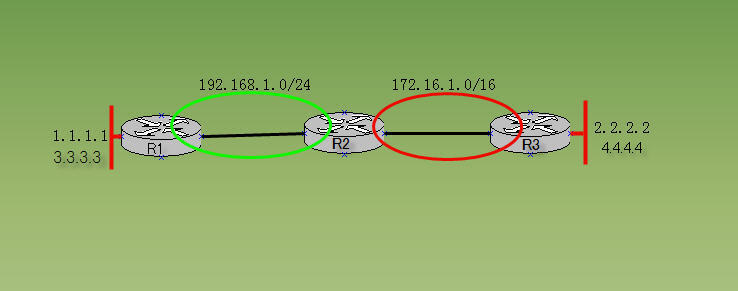
osfp中发布静态路由

拓扑图如下:


配置如下:
R1#sh running-config
Building configuration…

Current configuration:
!
version 12.1
service timestamps debug uptime
service timestamps log uptime
no service password-encryption
!
hostname R1
!
!
!
!
!
!
memory-size iomem 15
ip subnet-zero
!
!
!
!
interface Loopback0
ip address 1.1.1.1 255.255.255.0
!
interface Loopback1
ip address 3.3.3.3 255.255.255.0
!
interface FastEthernet0/0
no ip address
shutdown
duplex auto
speed auto
!
interface FastEthernet0/1
ip address 192.168.1.1 255.255.255.0
duplex auto
speed auto
!
router ospf 1
log-adjacency-changes
redistribute static subnets
!
ip classless
ip route 2.2.2.0 255.255.255.0 192.168.1.2
ip route 4.4.4.0 255.255.255.0 192.168.1.2
ip route 172.16.0.0 255.255.0.0 192.168.1.2
no ip http server
!
!
line con 0
transport input none
line aux 0
line vty 0 4
login
!
end


R2#sh running-config
Building configuration…

Current configuration:
!
version 12.1
service timestamps debug uptime
service timestamps log uptime
no service password-encryption
!
hostname R2
!
!
!
!
!
!
memory-size iomem 15
ip subnet-zero
!
!
!
!
interface Ethernet1/0
ip address 192.168.1.2 255.255.255.0
!
interface Ethernet1/1
ip address 172.16.1.1 255.255.0.0
!
interface Ethernet1/2
no ip address
shutdown
!
interface Ethernet1/3
no ip address
shutdown
!
router ospf 1
log-adjacency-changes
redistribute static subnets
network 172.16.0.0 0.0.255.255 area 0
network 192.168.1.0 0.0.0.255 area 0

!
ip classless
ip route 1.1.1.0 255.255.255.0 192.168.1.1
ip route 3.3.3.0 255.255.255.0 192.168.1.1
no ip http server
!
!
line con 0
transport input none
line aux 0
line vty 0 4
login
!
end


R3#sh running-config
Building configuration…

Current configuration:
!
version 12.1
service timestamps debug uptime
service timestamps log uptime
no service password-encryption
!
hostname R3
!
!
!
!
!
!
memory-size iomem 15
ip subnet-zero
!
!
!
!
interface Loopback0
ip address 2.2.2.2 255.255.255.0
!
interface Loopback2
ip address 4.4.4.4 255.255.255.0
!
interface Ethernet1/0
ip address 172.16.1.2 255.255.0.0
!
interface Ethernet1/1
no ip address
shutdown
!
interface Ethernet1/2
no ip address
shutdown
!
interface Ethernet1/3
no ip address
shutdown
!
router ospf 1
log-adjacency-changes
network 2.2.2.0 0.0.0.255 area 2
network 4.4.4.0 0.0.0.255 area 3
network 172.16.0.0 0.0.255.255 area 0
!
ip classless
no ip http server
!
!
line con 0
transport input none
line aux 0
line vty 0 4
login
!
end

路由表显示

R1#sh ip route
Codes: C - connected, S - static, I - IGRP, R - RIP, M - mobile, B - BGP
D - EIGRP, EX - EIGRP external, O - OSPF, IA - OSPF inter area
N1 - OSPF NSSA external type 1, N2 - OSPF NSSA external type 2
E1 - OSPF external type 1, E2 - OSPF external type 2, E - EGP
i - IS-IS, L1 - IS-IS level-1, L2 - IS-IS level-2, ia - IS-IS inter area
* - candidate default, U - per-user static route, o - ODR
P - periodic downloaded static route

Gateway of last resort is not set

1.0.0.0/24 is subnetted, 1 subnets
C       1.1.1.0 is directly connected, Loopback0
2.0.0.0/24 is subnetted, 1 subnets
S       2.2.2.0 [1/0] via 192.168.1.2
3.0.0.0/24 is subnetted, 1 subnets
C       3.3.3.0 is directly connected, Loopback1
4.0.0.0/24 is subnetted, 1 subnets
S       4.4.4.0 [1/0] via 192.168.1.2
S    172.16.0.0/16 [1/0] via 192.168.1.2
C    192.168.1.0/24 is directly connected, FastEthernet0/1


R2#sh ip route
Codes: C - connected, S - static, I - IGRP, R - RIP, M - mobile, B - BGP
D - EIGRP, EX - EIGRP external, O - OSPF, IA - OSPF inter area
N1 - OSPF NSSA external type 1, N2 - OSPF NSSA external type 2
E1 - OSPF external type 1, E2 - OSPF external type 2, E - EGP
i - IS-IS, L1 - IS-IS level-1, L2 - IS-IS level-2, ia - IS-IS inter area
* - candidate default, U - per-user static route, o - ODR
P - periodic downloaded static route

Gateway of last resort is not set

1.0.0.0/24 is subnetted, 1 subnets
S       1.1.1.0 [1/0] via 192.168.1.1
2.0.0.0/32 is subnetted, 1 subnets
O IA    2.2.2.2 [110/11] via 172.16.1.2, 00:01:12, Ethernet1/1
3.0.0.0/24 is subnetted, 1 subnets
S       3.3.3.0 [1/0] via 192.168.1.1
4.0.0.0/32 is subnetted, 1 subnets
O IA    4.4.4.4 [110/11] via 172.16.1.2, 00:01:12, Ethernet1/1
C    172.16.0.0/16 is directly connected, Ethernet1/1
C    192.168.1.0/24 is directly connected, Ethernet1/0


R3#sh ip route
Codes: C - connected, S - static, I - IGRP, R - RIP, M - mobile, B - BGP
D - EIGRP, EX - EIGRP external, O - OSPF, IA - OSPF inter area
N1 - OSPF NSSA external type 1, N2 - OSPF NSSA external type 2
E1 - OSPF external type 1, E2 - OSPF external type 2, E - EGP
i - IS-IS, L1 - IS-IS level-1, L2 - IS-IS level-2, ia - IS-IS inter area
* - candidate default, U - per-user static route, o - ODR
P - periodic downloaded static route

Gateway of last resort is not set

1.0.0.0/24 is subnetted, 1 subnets
O E2    1.1.1.0 [110/20] via 172.16.1.1, 00:01:19, Ethernet1/0
2.0.0.0/24 is subnetted, 1 subnets
C       2.2.2.0 is directly connected, Loopback0
3.0.0.0/24 is subnetted, 1 subnets
O E2    3.3.3.0 [110/20] via 172.16.1.1, 00:01:19, Ethernet1/0
4.0.0.0/24 is subnetted, 1 subnets
C       4.4.4.0 is directly connected, Loopback2
C    172.16.0.0/16 is directly connected, Ethernet1/0
O    192.168.1.0/24 [110/20] via 172.16.1.1, 00:01:19, Ethernet1/0

测试:


R1#ping 4.4.4.4

Type escape sequence to abort.
Sending 5, 100-byte ICMP Echos to 4.4.4.4, timeout is 2 seconds:
!!!!!
Success rate is 100 percent (5/5), round-trip min/avg/max = 12/19/28 ms
R1#ping 2.2.2.2

Type escape sequence to abort.
Sending 5, 100-byte ICMP Echos to 2.2.2.2, timeout is 2 seconds:
!!!!!
Success rate is 100 percent (5/5), round-trip min/avg/max = 8/15/28 ms


R3#ping 1.1.1.1

Type escape sequence to abort.
Sending 5, 100-byte ICMP Echos to 1.1.1.1, timeout is 2 seconds:
!!!!!
Success rate is 100 percent (5/5), round-trip min/avg/max = 16/20/24 ms
R3#ping 3.3.3.3

Type escape sequence to abort.
Sending 5, 100-byte ICMP Echos to 3.3.3.3, timeout is 2 seconds:
!!!!!
Success rate is 100 percent (5/5), round-trip min/avg/max = 12/16/24 ms


如有转载请写明出处http://hi.baidu.com/key1088。


卸载TCP/IP协议总结

正常情况下、网卡属性里面TCP/IP协议卸载按钮是灰色的,无法卸载。

 1.找到%winroot%/inf/nettcpip.inf,用记事本打开。

[MS_TCPIP.PrimaryInstall]
Characteristics = 0xa0 <------把此处的0Xa0改为0x80

2.网卡属性——安装——网络类型组件——协议——从磁盘安装——浏览到刚才修改的文件——Internet协议(TCP/IP)

3.现在Internet TCP/IP卸载按钮就是可选的了。

4.卸载 Internet TCP/IP,重启就卸载完成、


安装就大同小异了,不写了。